

Singapore Cookies
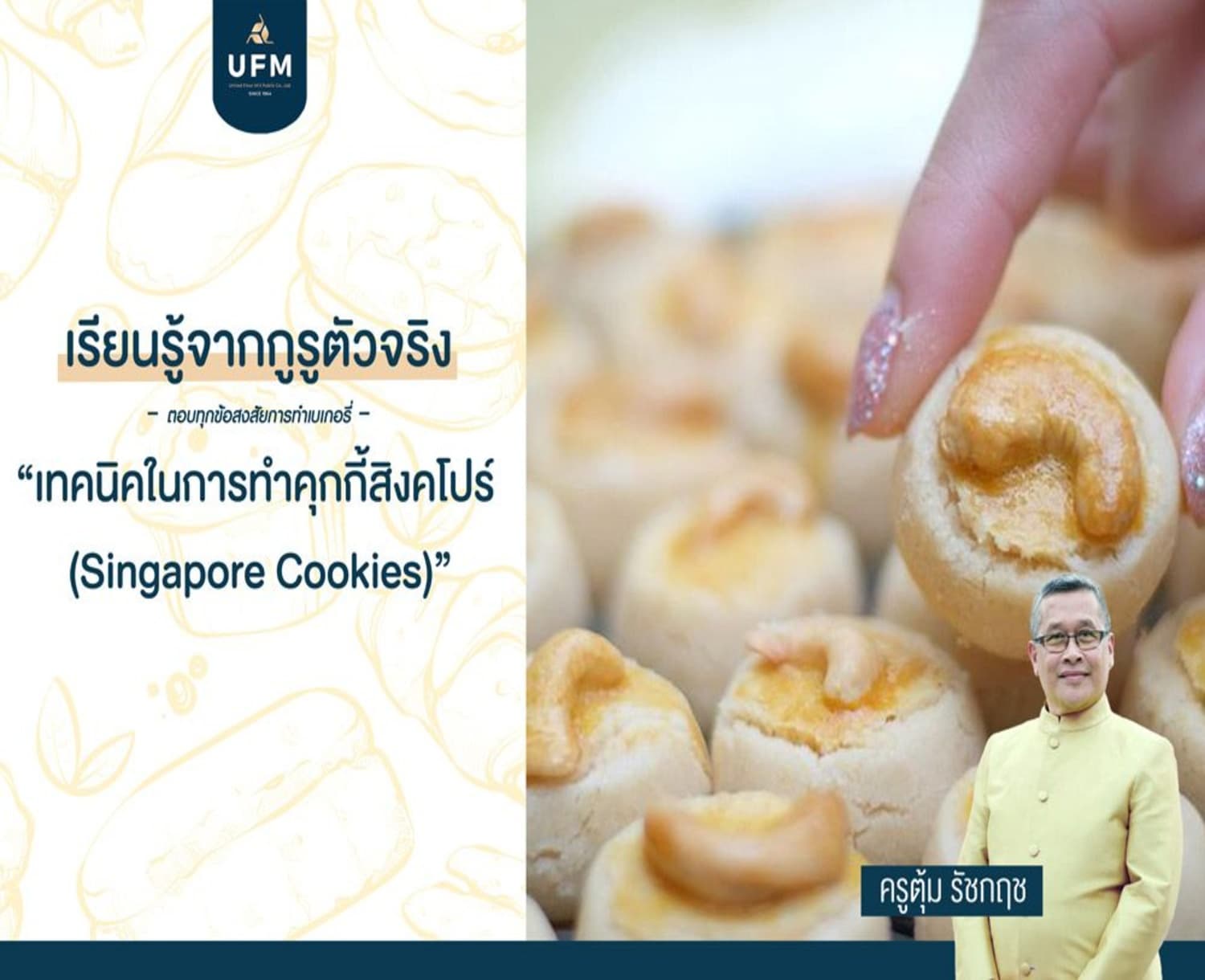
Tips for Making Singapore Cookies (Kueh Bangkit–Style Cookies)
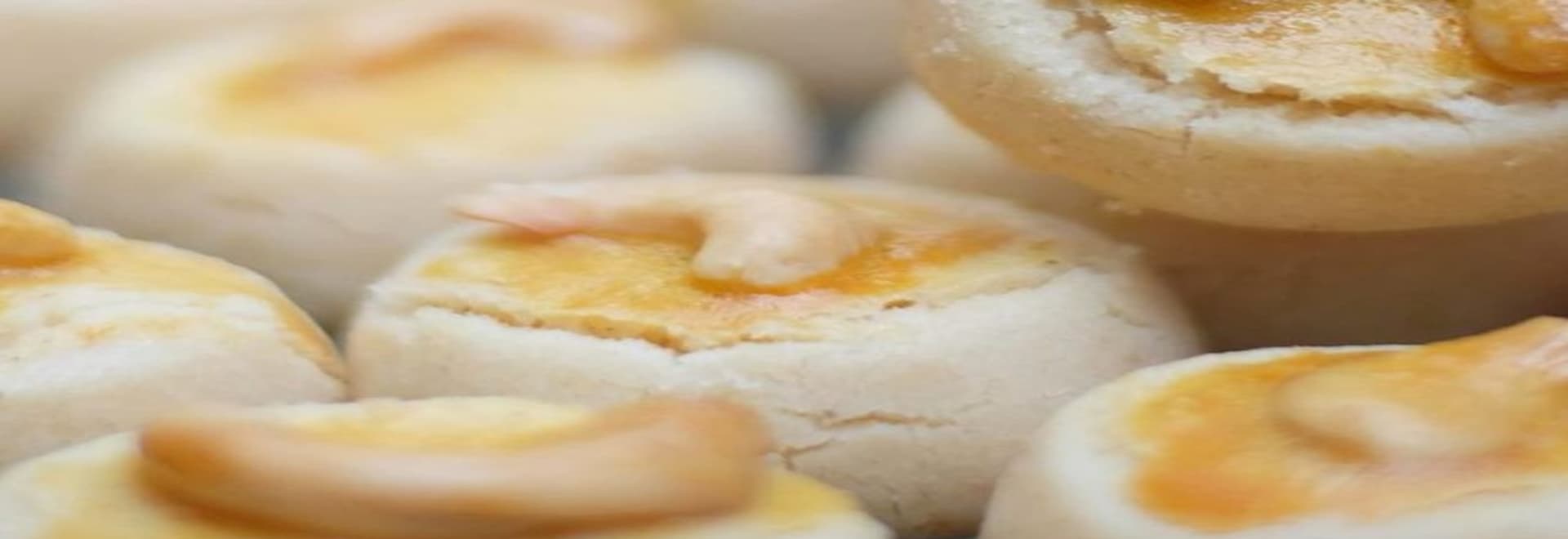
During the Chinese New Year season, there is a popular bakery item originally from Malaysia that has become a festive favorite. These cookies have a melt-in-your-mouth texture with a perfect balance of mild saltiness and richness. The top is decorated with a roasted cashew nut—simple yet irresistible. This cookie is known as “Singapore Cookies.”
The recipe shared here was developed by Teacher Toom. It is soft, rich, and flavorful. For this formula, she specifically chooses UFM All-Purpose Wheat Flour – Eagle Brand (Plao Waao Flour) as it provides a light, soft, and pleasant texture.
Ready? Let’s begin!
Ingredients
Ingredient
Amount
UFM All-Purpose Wheat Flour (Eagle Brand)
200 g
Sifted icing sugar
90 g
Salt
3 g
Peanut butter
50 g
Palm oil or rendered pork lard
105 g
Cashew nut halves (for topping)
as needed
How to Make Singapore Cookies
Sift the all-purpose flour and set aside.
Combine the sifted flour, icing sugar, and salt. Stir gently until well mixed.
Add peanut butter and use your fingers to rub it into the flour until the mixture resembles fine crumbs.
Slowly pour in the oil while mixing gently until the dough forms loose granules.
Gather the dough into a mass and knead lightly until smooth with no dry flour remaining.
Note: Eagle Brand All-Purpose Flour contains a medium protein level—suitable for both bakery products and general cooking.
Divide dough into 50 g portions, roll each into a log, and shape. Repeat until finished.
Roll each piece again to tighten and smooth the dough, then cut into equal sections. Shape each into a neat round cookie.
Brush the top with egg wash once, place a raw cashew nut on top, then brush with egg wash again.
Bake at 170°C, top and bottom heat, for 20–22 minutes or until fully cooked.
Note: Teacher Toom does not use smoking candle aroma in this recipe because she prefers the natural flavor profile of this cookie.
Egg Wash for Topping
1 egg
A pinch of salt
1 tablespoon rice bran oil
4–5 drops egg-yellow food color
Method:
Mix gently with a spoon (do not whisk to create bubbles). Strain through a fine sieve before use.
Additional Techniques for Perfect Singapore Cookies
To make flavored versions (e.g., black sesame, almond, cashew):
Grind the nut or seed finely and substitute it for the peanut butter using the same weight.
If you want a smoked candle aroma:
Place cookies in a large stainless or glass container with a lit Thai scented candle. Let it burn briefly, then extinguish the flame and place the candle inside. Close the container for 20–30 minutes.
Shaping options:
Instead of hand-shaping, roll the dough 1 cm thick and use cookie cutters for different patterns.
For a rustic look:
Roll into balls and gently press to flatten, then decorate.
Oil selection matters:
Palm oil and pork lard behave differently. Both work, but each affects texture and melt-in-mouth feel.
Common Questions & Answers
Q: My Singapore cookies don’t melt in the mouth — what went wrong?
A: The type of fat affects texture. While vegetable oils work, palm oil or lard (saturated fats) produce a better melt-away texture.
Q: The cookies turned out hard and too crunchy — why?
A: Possible reasons:
Overmixing
Using butter or incorrect ingredient ratio
Kneading too long
Q: Which ingredient makes the cookie melt in the mouth?
A: Using saturated fat (palm oil or lard) and avoiding nut butters or heavy add-ins helps preserve the delicate texture.
Q: How to prevent dough from sticking to hands or becoming greasy?
A: Reduce the amount of oil.
Q: My dough is too firm and won’t roll smoothly — what should I do?
A: Roll it out and rest the dough before shaping.
Final Note
Teacher Toom hopes this Singapore Cookie recipe and the shared techniques will be useful and enjoyable.
If you’d like to explore more recipes or tips, follow the next episode at the link below.